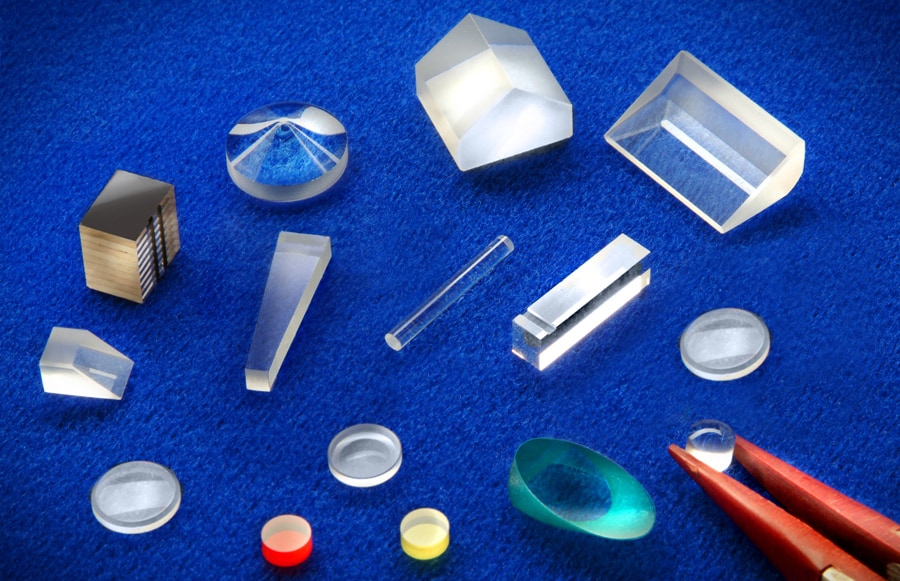
Q-flex MRF Polishing
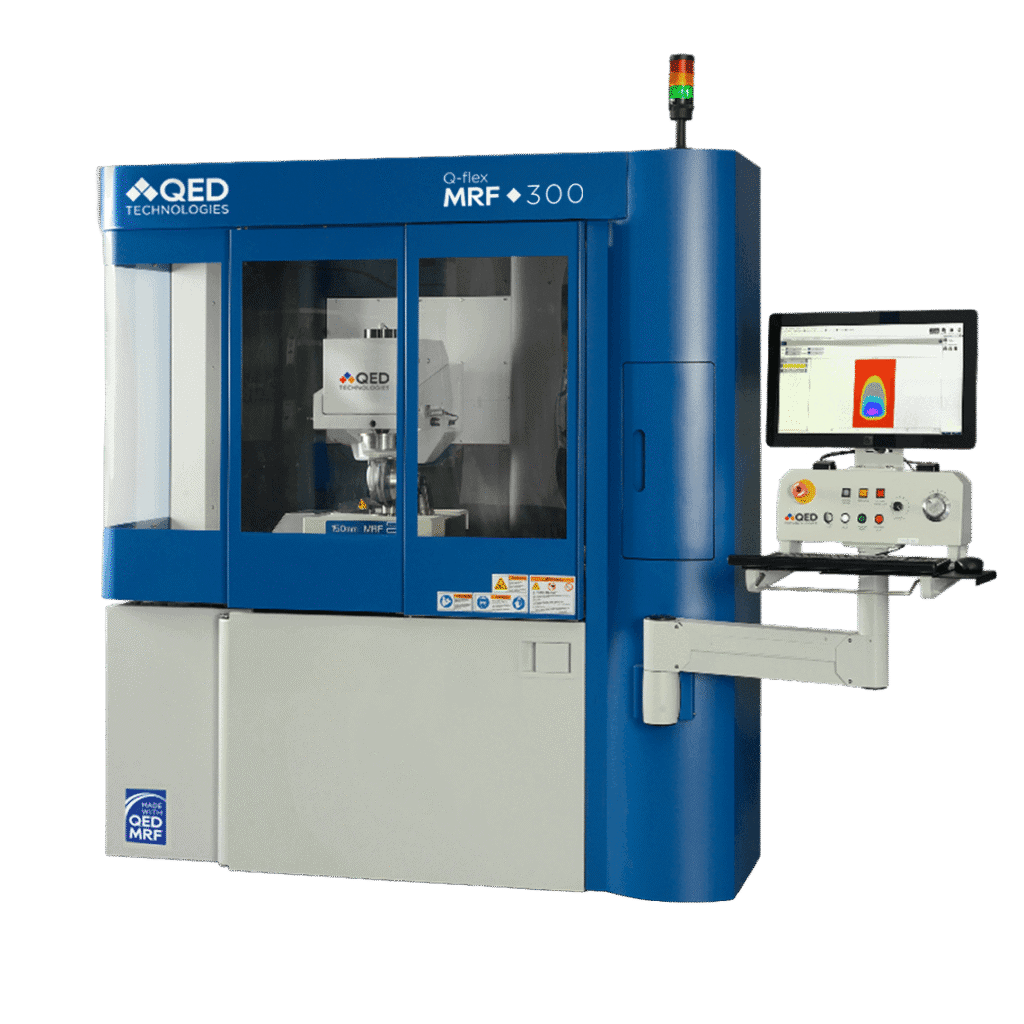
Sydor Optics utilizes QED Q-flex Magnetorheological Finishing (MRF®) technology to deliver deterministic optical polishing with exceptional form control and ultra-low surface roughness. The Q-flex 300 combines modular hardware, intelligent software modes, and advanced fluid management to support prototype through high-volume production across complex geometries.
Built on the proven precision and determinism of MRF finishing, the Q-flex system provides the flexibility of a modular design in a truly production-ready platform. With a focus on ease of use, it enables faster cycle times and exceptional results—from flats and spheres to aspheres and freeforms.
Deterministic Form Correction
Magnetorheological Finishing (MRF) provides highly predictable material removal for rapid convergence and repeatable result.
- 5–10x form improvement in a single iteration
- Surface irregularity as low as λ/30–λ/40 PV (metrology department)
- Precise correction of transmitted wavefront error
- Prism angle and thickness variation correction
- Ability to induce controlled surface figure or phase structures
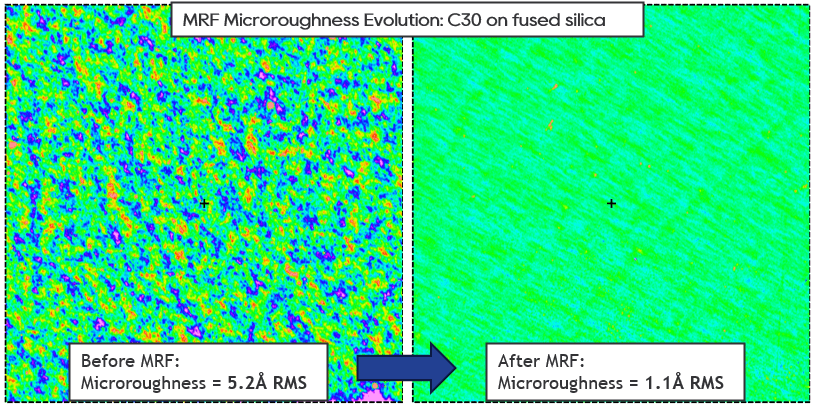
Ultra-Low Surface Roughness
- <1 nm RMS micro-roughness on most materials
- 0.1–0.2 nm RMS achievable on select materials
- Subsurface damage removal
- Stress reduction
- Improved laser damage resistance
- Removal of haze and fine cosmetic defect
Flexible Polishing Platform
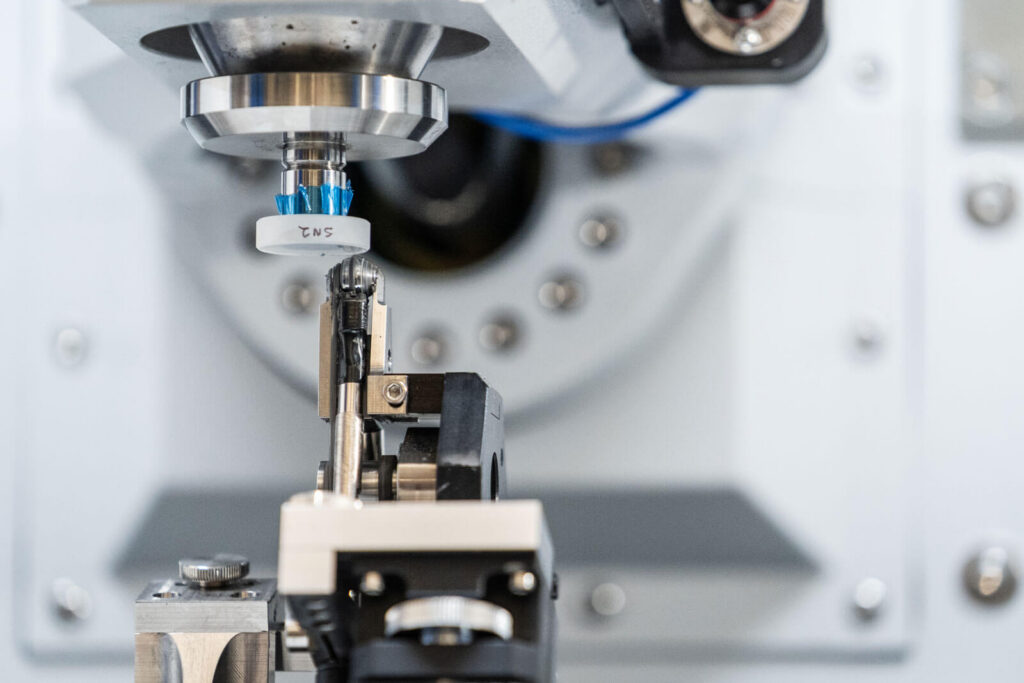
Interchangeable MRF Heads (10 mm – 150 mm)
- Large heads for faster removal on larger apertures
- Small heads for reduced edge exclusion
- Concave radius optimization
- Freeform capability
Configurable Software Modes
Rotational Mode
- Optimized for symmetric optics
- High removal rates
- Efficient smoothing of diamond turning marks
- Optional freeform and variable plunge upgrades
Raster Mode
- Ideal for non-round and freeform optics
- Mid-spatial frequency error correction
- Efficient spherical and aspherical polishing
- Low cycle times
Advanced Fluid Control
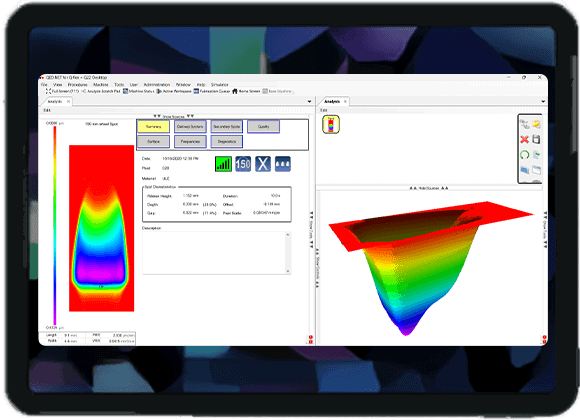
- Electronic fluid strength monitoring
- Stable fluid delivery system
- Extended fluid life
- Consistent removal rates across production runs
About Magnetorheological Finishing (MRF®)
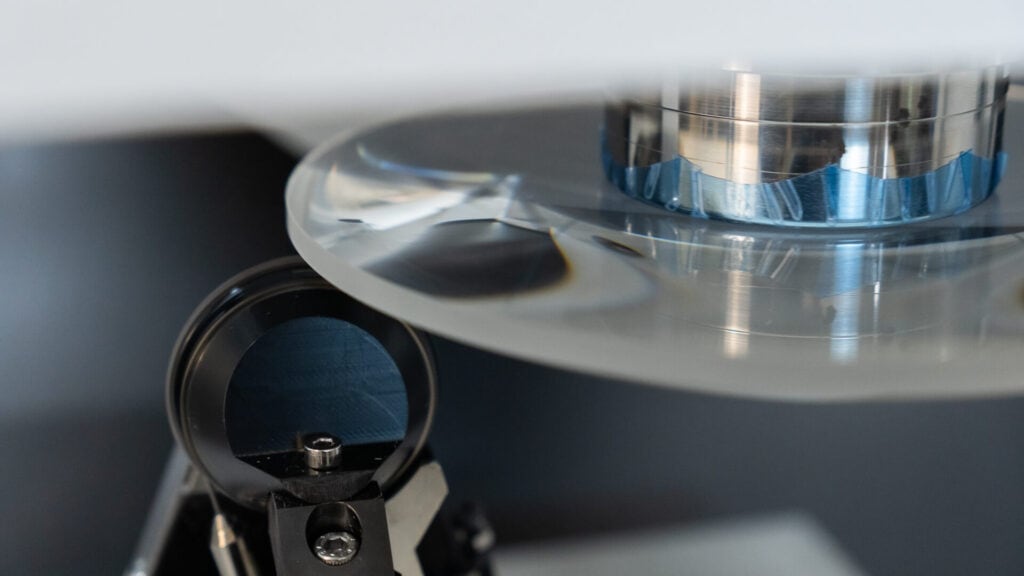
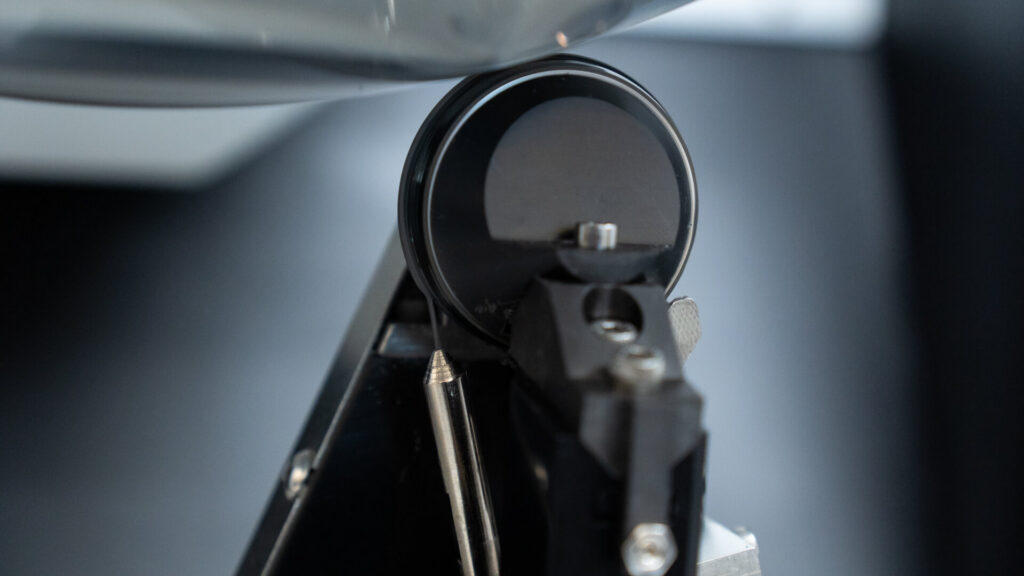
Magnetorheological Finishing (MRF) is a deterministic polishing process that uses a magnetorheological fluid to create a flexible polishing tool. This fluid stiffens in a magnetic field to form a precise, sub-aperture polishing spot that can be controlled to remove material selectively. MRF excels at correcting form errors, improving surface roughness, and handling complex geometries without introducing subsurface damage.
The Q-flex platform, powered by proven MRF technology, ensures precise, predictable, and repeatable finishing results. Modular configurations handle a wide range of shapes, sizes, and materials with ease, while intuitive software and smart fluid management streamline operations for high-volume production.

The MRF Polishing Experts
Sydor Optics leverages the Q-flex 300 to polish optical glass, glass ceramics, and other materials, supporting geometries from flats and spheres to aspheres and freeforms. Our expertise ensures high convergence rates, ultra-low roughness, and surface integrity improvements, making us a leader in advanced optical finishing for demanding applications.
General MRF Manufacturing Limits
| Capability | Typical Specifications |
|---|---|
| Form Convergence | 5–10x improvement per iteration |
| Surface Irregularity | λ/30–λ/40 PV (metrology dependent) |
| Micro-Roughness | <1 nm RMS |
| Ultra-Low Roughness | 0.1–0.2 nm RMS (material dependent) |
| MRF Head Sizes | 10 mm – 150 mm |
| Supported Geometries | Flats, Spheres, Aspheres, Freeforms |
| Production Volume | Prototype to High Volume |